
Liner Notes
- This episode aired on Saturday, October 2th, 2021 at 2:00 PM (PDT), streaming on KUTZ FM, Sacramento Free Form radio, and broadcasting at 103.1 FM in Sacramento, California. To replay this episode, scroll to the bottom of this page, or visit the Local Gold YouTube channel.
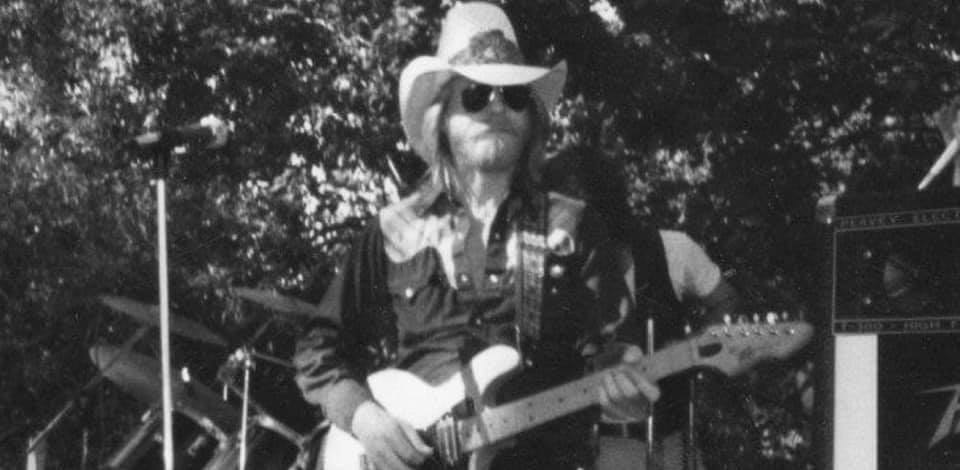
“Who the hell is Jerry McClendon?”
…you might be asking yourself. This is pretty much exactly what we at Local Gold wondered within moments of the opening steel and telecaster riff of Rum Runner hitting our ears like a lightning strike. We heard the song for the first time after finding the 45-rpm disc on Sacramento’s Raven Records label at a thrift store. Desperate to find more, we scoured our local record hunting grounds, pinged our network of record nerds, searched online, set our eBay and Discogs alerts, and endeavored to learn exactly who the hell Jerry McClendon was.
It turned out that Jerry–a musician and performer whose bonafides easily merit a Local Legend badge–was right under our noses the whole time, still playing. So, not only did we find more of Jerry’s great music, we found Jerry. He was kind enough to talk to us about his life and astonishing professional music career, which spans more than six decades, beginning in ernest in the mid-1960s and continuing to the present day.

Born into a musical family in the farm country of Pendleton, Indiana, Jerry and his siblings grew up with music all around them. The McClendon’s family roots extended from nearby Kentucky, where they partook of local bluegrass, country, and preceding regional folk music. Everybody sang, and almost everybody played at least one instrument—if not more.
In 1957, nine members of the McClendon clan loaded themselves into an old station wagon bound for California to join preceding family who had resettled in the region. The family made Sacramento their home, and an adolescent Jerry would lay awake at night listening to local KRAK radio, learning songs on the guitar his father bought for him.
Making music was just something the McClendon family did. Most of them, Jerry included, never really thought about doing it professionally. Then one day, at the age of 20, Jerry was sitting at a burger stand in North Sacramento, and heard live music emanating from a little bar across the street. The music wasn’t particularly good, and he wasn’t old enough to go in the bar to check it out, but he was curious enough to walk over and ask a guy hanging around out front if the musicians inside were being paid.
Informed that they were in fact earning money, Jerry decided right then and there that he could do that too, and more than that: he could probably do it better. So he did, and in less than a year after that fateful day, Jerry had learned enough songs for a modest set list, assembled a trio called ‘The Three J’s’, and took the stage for his first paid residency gig at a bar in Rio Linda. The year was 1965, and the band earned a percentage of the nightly bar take—usually about $3.00 apiece. Not much, but bigger things lay in store for Jerry McClendon.

Jerry would continue to improve his musicianship, learning to play fiddle, keys, bass, drums, saxophone, and harmonica. He would form, join, and/or lead a number of local resident and touring bands, including Bobby Duke & The Dynamics, The S.K.D’s, The John Miller Band, Johnny Grizzle and the Fabulous Hangups, Getteysburg Express, The Country Road Band, and Jerry McClendon and the Countrymen—among others.
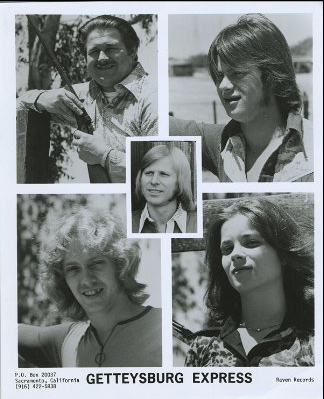

In the late 1960s and early 1970s, Jerry found a home in the vibrant local music scene that boasted hundreds of thriving live music venues around the greater Sacramento area: The Colonial Club, The Forty Grand, Countryland, and ’Okie’ Paul Westmoreland’s local landmark The Detour Inn; there was The Outpost, The Maverick, and South Bowl; then Cowtown and The Black Stallion in Orangevale; The Howdy Club and The Metropolitan in South Sac, and Lloyd Hickey’s El Rancho in West Sacramento. Jerry played them all (and then some). He even played a gig in the yard at Folsom Prison in 1972.
In the early 1970s, Jerry would go on to record for both Love and Raven Records, including sessions for the latter at Buck Owen’s studio in Bakersfield and with the ‘A-Team’ at Bradley’s Barn in Nashville, Tennessee. Yeah, you heard us right—that A-Team. We’re talking about legendary studio musicians like Buddy Harman (drums), ‘Pig’ Robbins (keys), Grady Martin (guitar), Buddy Spicher (fiddle), and Hal Rugg (steel guitar).
Jerry would end up playing all over the West Coast, the Pacific Northwest, and on up into Canada—along the way sharing the stage and rubbing elbows with notable contemporaries like Jerry Lee Lewis, Willie Nelson, Johnny Paycheck, George Jones, Sammi Smith, Freddie Hart, Rose Maddox, Red Sovine, Jerry Wallace, Buddy Allen, and many more.
There was the time he and Little Jimmy Dickens got their touring RVs confused. They were nearly identical models, rendered more so by post-show, uhhh, celebrations. “We drank a little bit in those days,” Jerry recalls. Then there was the time he played a show with Johnny Paycheck up north in Redding, California. By Jerry’s telling it was the Johnny Paycheck show in Redding that almost wasn’t, since Paycheck refused to play unless the venue provided beer—A LOT of beer. Despite refusals and probably a few local regulations, A LOT of Coors managed to find its way backstage (as well as onstage). So many great stories. By this time, Jerry’s songs were being played on radio stations around the world. One of them, Let’s Go Back To The Country (Raven Records, R-81087), caused such a ruckus in New Zealand that is was banned.
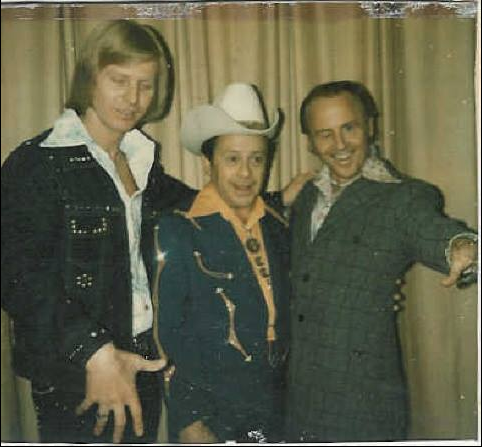
Sometime around 1972, Jay Hoffer (then General Manager for KRAK Radio) wrote some lyrics and Jerry put them to music. It’s Gold was recorded for Raven Records (R-81082), and the song garnered national airplay in late 1973 and early 1974, hitting number 9 on the country charts. It was soon adopted by The Sacramento Convention and Visitor Bureau as the Official Song for Gold Discovery Days—a popular annual event held in Sacramento well into the 1980s. We here at Local Gold have also proudly adopted it as our theme song.

What can we say? Local Gold loves Jerry McClendon, and you will too if you’ve got a lick of sense. Now, go on and listen to Episode 1 to hear the music–and better still, directly from Jerry himself in our exclusive interview. Remember, Jerry McClendon still plays out locally—so get out there and hear this legend play a special event or drop into his regular karaoke nights to pay your respects. Check out his schedule at jerrymcclendon.com, or on Facebook. Tell him Local Gold sent you.
Music Featured In This Episode
(in order of appearance)
- Rum Runner (Raven Records: R-81082 [B]; 1973)
- Sometimes (Love Records: LR-103; 1972)
- Take Her Flowers (Love Records: LR-104; 1972)
- Daddy Don’t You Walk So Fast (Raven Records: R-81079 [A]; 1973)
- Wish I Was In California (Raven Records: R-81079 [B]; 1973)
- Wonder Of You (Raven Records: R-81081 [A]; 1973)
- Walk In Sunshine (Raven Records: R-81081 [B]; 1973)
- Let’s Go Back To The Country (Raven Records: R-81087 [A]; 1976)
- There’s A Right Way (Raven Records: R-81087 [B]; 1976)
- It’s Gold (Raven Records: R-81082 [B]; 1973)
 Local Gold